

That Moment When...SharePoint Starts “Adulting”
Today we are going to focus on a special type of SharePoint site. It doesn’t necessarily fall into the “Newsroom” or “Newspaper” analogy. It’s only purpose is to facilitate your business processes.
This is the beginning of the “Adulting” stage of SharePoint. The point where it stops being just a collaboration playground and starts carrying real organizational responsibility.
This is where SharePoint gets a job.
From Campus Hangouts to Career Responsibilities
In earlier stages, SharePoint might have been:
A team site for collaboration
A communication hub for announcements
A place to share documents
All good things.
But now? Now it’s expected to support real business processes across departments.
This is the shift from “Let’s share files” to “Let’s run the business.”
That’s adulting.
Adulting Means Structure

When a young adult moves into their first apartment, something magical happens.
They realize rent is due every month.
Paperwork matters.
Deadlines are real.
The same is true for SharePoint at this stage. This is where your site becomes the backbone for:
Cross-department workflows
Standard operating procedures
Onboarding and offboarding processes
Approval chains and documentation trails
It’s no longer just convenient. It’s accountable. And accountability requires structure.
The Cross-Department Roommate Situation
Adulting often means sharing space and responsibilities with others.
Finance. HR. IT. Operations.

When SharePoint enters this stage, it becomes the shared space where everyone respects the roommate agreement. That means:
Established procedures
Clear permissions
Defined ownership
Organized libraries with metadata
Version Control
Your employees submit expense reports for their trips? Who owns that? Finance? HR? Payroll? They all play a role in the process. They have their own distinct, secure workspaces for their daily duties.
Who is going to let the other roomies into their room to dig around in their drawers?
That’s when we need to create a shared space in the form of a stand-alone SharePoint site that manages the business process related documents, the workflows and, yes, even the sign-offs. It's the living room of the house. The roomies can keep their own doors locked and still work together.
The Legal and Historical “Important Papers” Storage

Every grown adult eventually creates that space. For some, it’s a drawer. For others, it’s a whole file cabinet. It just depends on how long you’ve been Adulting. You know the one.
Contracts. Insurance. Tax records. Things you absolutely cannot lose.
In the SharePoint young-adult phase, the site starts holding:
Official policies
Regulatory documentation
Contracts and agreements
Historical records
This is where governance and retention policies step in. Not as bureaucracy, but as protection. Because messy compliance is the corporate version of not being able to find your tax records if the IRS asks.
Painful.
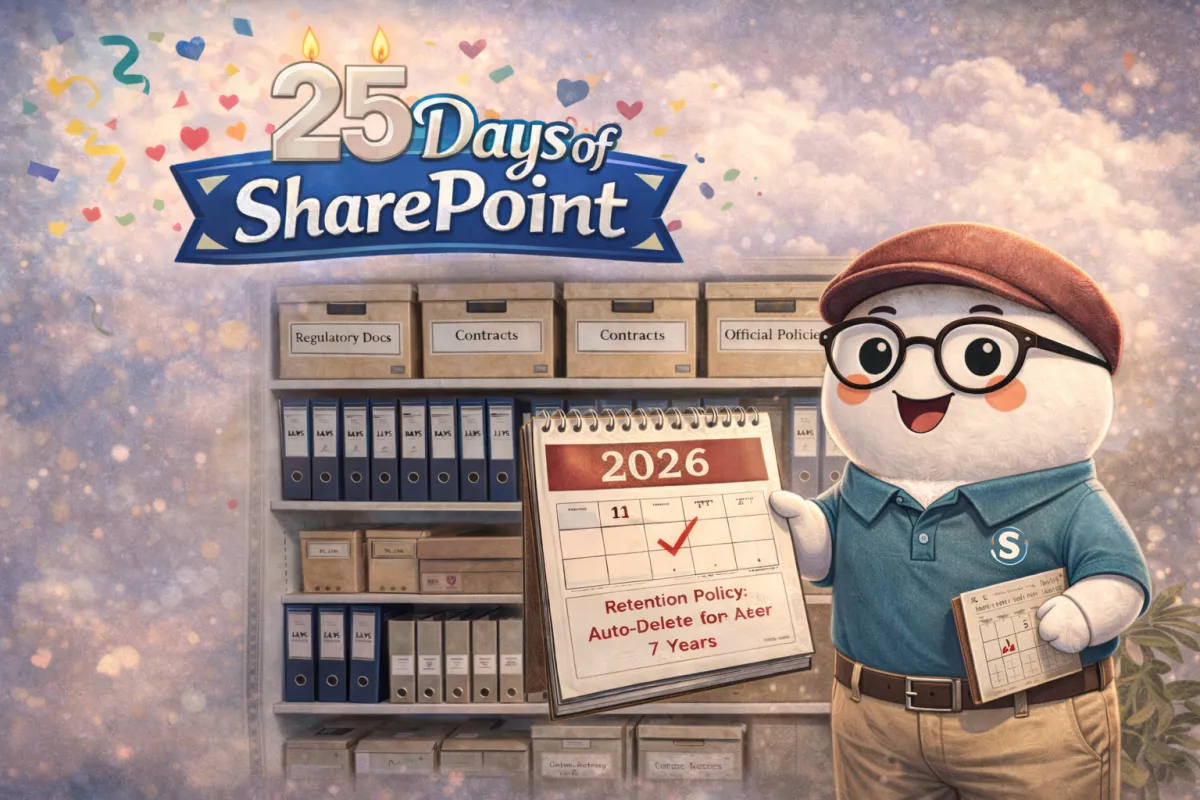
Creating designated spaces gives you ONE PLACE to keep clean, organized and start adding automation that reminds you when stuff can be put in the shredder, like I do each year for that tax stuff from 7+ years ago.
What Mature “Adulting” SharePoint Looks Like
A young-adult SharePoint site has:
A clearly defined purpose
Identified business owners
Structured navigation
Governance alignment
Adoption support so people actually use it
It doesn’t happen by accident. It happens when someone intentionally designs it to support how the business runs.
Where Is Your SharePoint on the Adulting Scale?
If someone in leadership asked:
“Where is the official version of this policy?”
Would your organization point to one trusted SharePoint site?
Or would five versions appear in five different inboxes?
That’s the difference between adolescence and adulting.
Take a look at your documentation and how well is it thriving in the Adulting phase? Is it:
Non-existent?
Still figuring itself out?
Managing a small circle of responsibilities?
Or confidently running cross-department processes?
Every organization grows at its own pace. But this stage is powerful. When SharePoint starts adulting, it stops being a tool people tolerate and becomes a platform people depend on.
How Can I Help?
And if you’re ready to help your SharePoint move from “just getting by” to confidently adulting, that’s where I come in. I specialize in the people side of change, because technology maturity only works when people grow with it.
And that’s exactly where I love to help.


